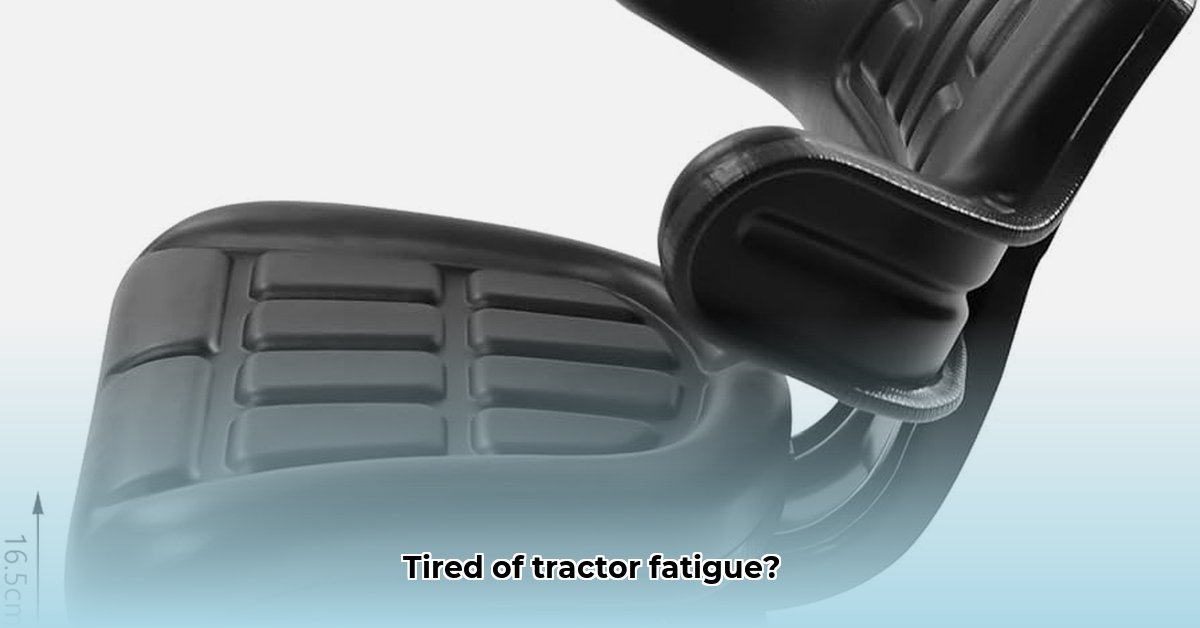
Tractor Seat Swivels: A Comprehensive Guide to Enhanced Operator Comfort and ROI
Farming demands long hours and strenuous work, frequently resulting in significant physical strain on operators. Musculoskeletal disorders (MSDs), such as back pain, neck stiffness, and carpal tunnel syndrome, are prevalent among agricultural workers. These conditions not only cause discomfort but also translate into lost workdays, increased healthcare costs, and a substantial decrease in overall farm productivity. This article explores the benefits, limitations, and potential of swivel seats as a solution to mitigate these issues, focusing on ergonomic considerations and return on investment (ROI). For more information on tractor seat swivels, check out this helpful resource: TSC Tractor Seats.
The Problem of MSDs in Agriculture: A Costly Consequence
The physical demands of operating farm machinery lead to a high incidence of MSDs among farmers. These injuries result in significant economic losses due to decreased productivity, increased healthcare expenditure, and the costs associated with worker compensation claims. Beyond the financial impact, MSDs significantly affect the quality of life for agricultural workers, impacting their well-being and ability to perform their jobs effectively. The pervasive nature of this problem underscores the urgent need for practical and effective solutions. Do you know the percentage of farmers reporting MSDs annually? While precise figures vary regionally, studies consistently highlight a substantial portion of the agricultural workforce suffering from these debilitating conditions.
Swivel Seats: Mitigating MSDs and Enhancing Productivity
Swivel seats offer a promising solution to reduce MSDs in agricultural settings. By allowing for 360-degree rotation, they enable operators to effortlessly change their position without excessive twisting or reaching. This simple change significantly reduces strain on the back, neck, and shoulders, promoting a more natural and relaxed posture. Modern swivel seats incorporate additional features, such as adjustable height, lumbar support, and suspension systems, to further enhance comfort and minimize the impact of vibrations from uneven terrain.
Market Overview: Assessing the Current Landscape of Tractor Seat Swivels
Several leading manufacturers, such as Grammer and Sears, offer a range of tractor seat swivels. However, a consistent challenge in comparing models lies in the lack of standardized comparative data on features, durability, price, and long-term performance. This absence of readily available, objective information hinders informed purchasing decisions and suggests an opportunity for industry-wide standardization and more transparent data sharing. The current market landscape calls for more robust comparative analysis to guide consumer choices.
Economic Considerations (ROI): Quantifying the Benefits of Swivel Seats
While the initial investment in a swivel seat is readily apparent, calculating the overall ROI requires a comprehensive assessment of both direct and indirect costs and benefits. Direct costs include the purchase price and any associated installation expenses. However, quantifying the indirect benefits—such as reduced MSDs, increased productivity, decreased absenteeism, and improved worker morale—proves more challenging. While the potential savings from reduced healthcare costs and lost workdays are substantial, more rigorous research is needed to establish a concrete and standardized methodology for ROI calculation across different tractor types and seat models. Have you considered the potential long-term savings due to reduced employee turnover? This is another factor influencing the overall ROI.
Ergonomic Considerations: Optimizing Seat Selection for Operator Comfort
Choosing an appropriate swivel seat necessitates careful consideration of several ergonomic factors. Adjustability is paramount, ensuring that the seat can accommodate operators of varying sizes and preferences. Comfort features, such as breathable materials, adequate lumbar support and padding, and effective suspension systems, are essential for minimizing operator fatigue and discomfort. Compatibility with the existing tractor cab design is also crucial to guarantee proper functionality and safety. Remember, proper ergonomic design leads to increased productivity and reduced errors.
Actionable Recommendations for Stakeholders
Original Equipment Manufacturers (OEMs): Integrate ergonomic design principles into tractor seat manufacturing from the outset. Invest in research and development to create advanced swivel seats with innovative materials and improved suspension systems. Prioritize standardized testing procedures to ensure performance and safety.
Farmers: Prioritize comfort and adjustability when purchasing swivel seats. Consider professional ergonomic assessments to determine the best fit for individual needs. Remember that a comfortable operator is a productive operator.
Researchers: Conduct rigorous studies to quantify the correlation between swivel seat use, operator health, and productivity. Develop standardized testing protocols to facilitate objective comparisons and inform best practices.
Future Research Directions: Addressing Knowledge Gaps
Further research is vital to address current knowledge gaps. Comparative studies of various swivel seat models are needed to establish a clear understanding of relative performance. Standardized ergonomic testing procedures would improve the reliability of data and facilitate objective comparisons. Finally, the development of robust ROI analysis methodologies would strengthen the business case for adopting swivel seats across the agricultural sector.
Conclusion: Investing in Operator Well-being for Sustainable Agriculture
The widespread prevalence of MSDs among agricultural workers highlights a critical need for effective ergonomic solutions. Swivel seats offer a significant opportunity to improve operator comfort, reduce MSDs, and boost productivity. However, the lack of standardized data and comprehensive ROI analyses emphasizes the need for further research and collaboration among manufacturers, farmers, and researchers. By investing in ergonomic improvements like swivel seats, we can foster a more sustainable and healthy future for agriculture.